The first time I heard about Teresa Magbanua was earlier this year when my dad me that my ‘grandma’ has a class of Philippine Coast Guard patrol vessels named in her honor.
You see, I have close ties to the name since it happens to be my middle name and my mom’s maiden name. Now, we don’t exactly know if there is a relation to the Visayan Joan of Arc….but I’m not going to say that we aren’t because my maternal grandfather’s siblings do share some resemblance to Naynay Isa.
I know my dad was joking but I couldn’t help but be curious about my (unconfirmed) great great geat grandma, so I decided to do some research on her and it did NOT disappoint. For a lack of a better term, she was a certified BADASS.
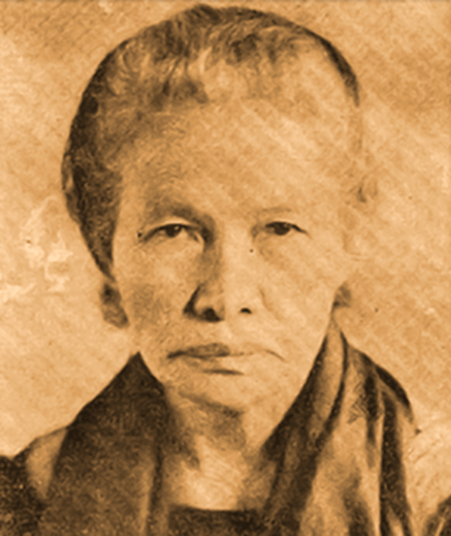
Born in 1868 in Pototan, Iloilo, Philippines Teresa Ferraris Magbanua was a schoolteacher turned military leader. Magbanua was skilled in horseback riding and marksmanship, which would later be beneficial to her.
When the Philippine Revolution reached Illolio in 1898, she asked her husband Alejandro Balderas if she could assist and join her younger brothers on the battlefield but he refused. This didn’t stop her as he rode a horse to her uncle, Major General Perfecto Poblador and was able to convince him to let her join the army.
Naynay Isa became one of the few women to join the Visayan branch of the Katipunan, the secret revolutionary society. One of her sisters even described her as “dynamic personality, restless, and unafraid of any man,” like I said…BADASS.
She led troops into combat and won several battles and is credited as the only woman to lead troops in the Visayan area during the Revolution. She then fought against American colonial forces during the Philippine–American War.
Despite not fighting in World War II, she did whatever it took to resist the Japanese forces during thier occupation of the Philippines by selling her belongings to buy food and supplies for the local guerillas. She would later sell her property in Iloilo to help finance the guerilla movement, after her husband passed away.
After the three wars, she moved to Zamboanga in Mindanao to live the rest of her days with one of her sisters. It was said that she never remarried and didn’t have any children. She died in 1947. Her death was unnanounced and her burial was only attended by family and close friends.
I want to learn more about her when I go to the Philippines in the hopes that I can add on to the little knowledge known about her.
Who knows maybe I’ll discover that I am related to a badass like her, but if not, it will still be interesting to learn more about the Visayan Joan of Arc.
 Angelina's Angle